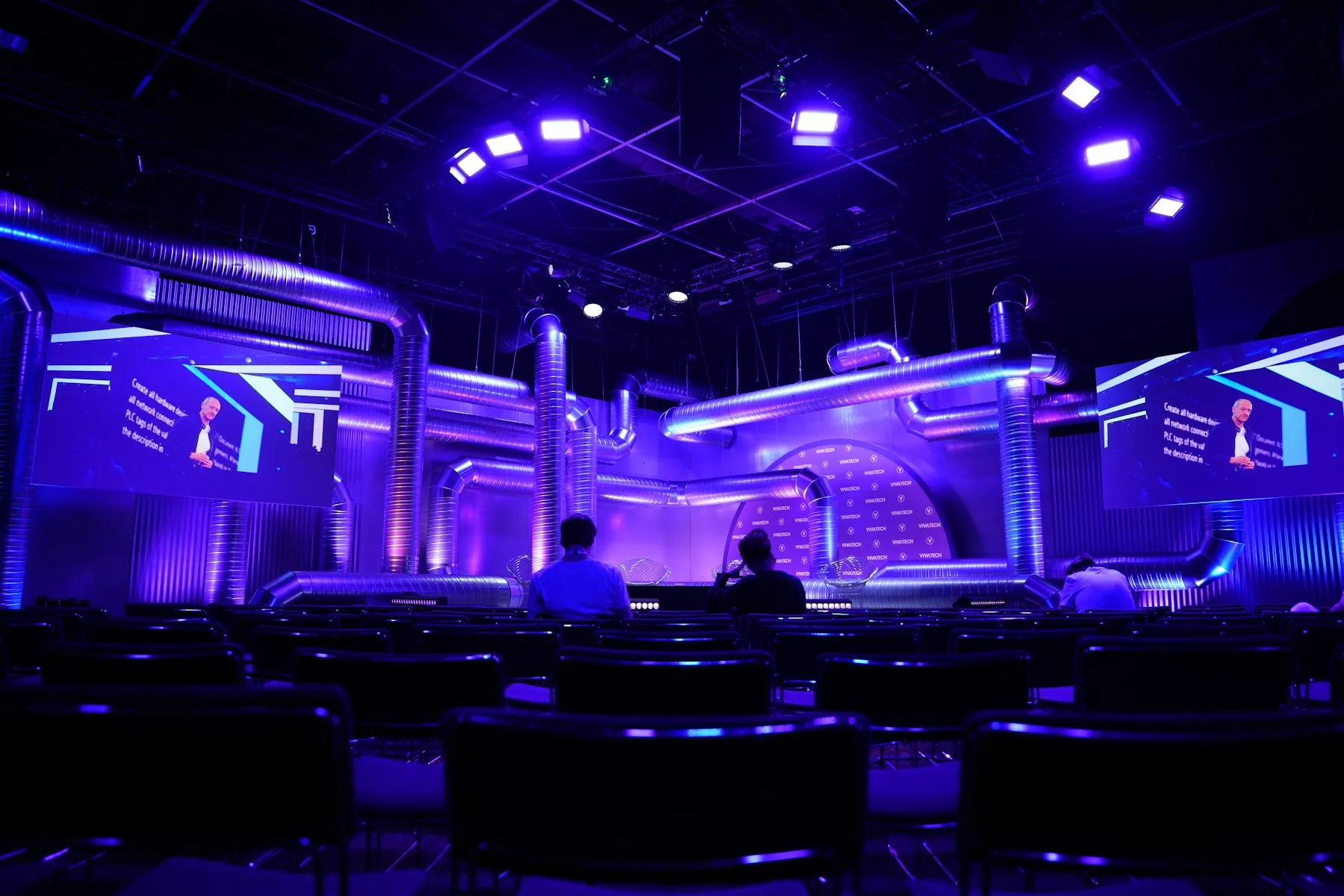
The large technical conference is in an odd position. Ticket prices have risen, attendance at the talks themselves has fallen, and a noticeable share of people in the building never enter a session room.
This gets reported as decline. It looks more like a function being unbundled.
What the talk used to do
Historically the conference talk did three jobs at once.
It distributed information that was hard to get otherwise. It established credibility for the speaker and their employer. And it gave a scattered community a reason to be in the same place at the same time.
The first job has been comprehensively taken over. Documentation is better, recorded talks are free and searchable, and the written version is usually more useful than the spoken one. Sitting in a darkened room to receive information you could read faster is a poor trade, and audiences have noticed.
What survived
The other two jobs are alive and well, which is why the events continue to sell out even as session rooms empty.
The credibility function has become more valuable, not less, precisely because attention is scarce. A talk that gets recorded and circulates for years is a durable professional asset.
The gathering function was never really about the talks. It was about the corridor, the queue for coffee, and the dinner afterwards. Several years of remote work made this obvious to everyone at once: the thing people missed was not the presentation.
The formats that are growing
Where organisers have adapted, the changes point the same direction.
Shorter sessions — fifteen to twenty minutes — because the information-transfer role is gone and what remains is the argument. Unconference blocks scheduled during the day rather than tacked on at the end. Long, deliberately unscheduled breaks. Workshops with a cap of thirty, which sell out first and cost the most.
The pattern is consistent: less broadcast, more room.
The uncomfortable economics
Big keynotes are expensive to produce and they are what sponsors are paying for. Corridors are cheap and they are what attendees value.
That mismatch is the actual pressure on the format, and it has no clean resolution. The events that seem healthiest have been honest about it — selling sponsors on access and adjacency rather than on stage time, and spending the budget on space and food instead of on production.
The talk is not dead. It has become a recording that happens to be filmed in front of an audience, while the audience is there for something else entirely.